
Selling
How to Prepare Your Sydney Property for Sale: A 30-Day Checklist
The strongest sale campaigns are prepared before the listing goes live. Use this practical 30-day plan to get the legal work, presentation and pricing strategy ready in the right order.
Reviewed 6 October 2026 · General information, not legal advice

The first week of a sales campaign attracts the buyers who have already been watching the market. If the contract is delayed, the photos are rushed or essential repairs are still underway, that early attention is difficult to recover.
A better approach is to start on Day 1 and work towards a planned launch on Day 30. This 30-day schedule is usually enough to organise the legal documents, choose the right sale strategy, improve presentation and prepare the property for photography—without turning the home into a renovation project.
This checklist is designed for a typical residential sale in Sydney. Complex titles, deceased estates, company ownership, building issues or unusual contractual matters may require more time and specific legal advice.
Days 1–7: Set up the sale correctly
Appoint a solicitor or conveyancer
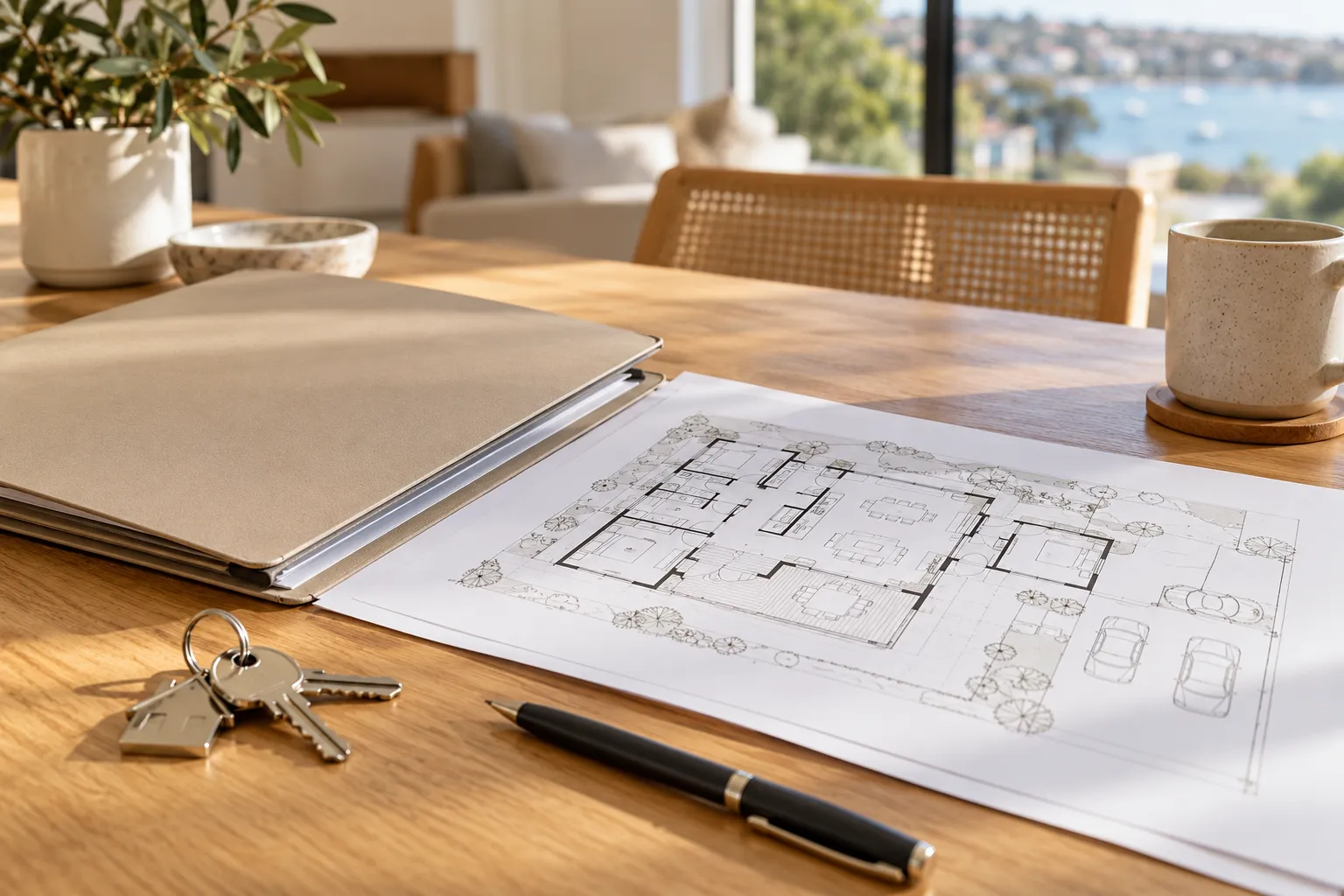
In NSW, residential property cannot be offered or advertised for sale until a contract for sale has been prepared. The draft contract must be prepared by an Australian legal practitioner or licensed conveyancer and be available for inspection through the selling agent.
The contract normally includes title documents, drainage information, the council planning certificate and relevant dealings affecting the land. Extra documents may be required for a swimming pool or spa. A strata sale also requires the relevant strata material, including a copy of the strata plan.
Starting the contract first prevents a common launch delay: the property is photographed and ready, but the agent is legally unable to put it on the market.
Give your conveyancer early notice of anything that may need investigation, such as:
- renovations or structures that may not have approval;
- easements, rights of way or shared access;
- a swimming pool or spa;
- current tenants;
- recent building or strata issues;
- solar panels under a finance arrangement; or
- inclusions you intend to remove before settlement.
Confirm who is legally selling
The names on the agency agreement and contract need to match the legal ownership structure. This deserves extra attention where the owner is a company, trustee, attorney, executor or an estate.
Your agent will also need to complete the required vendor identity checks. Resolving mismatched names or missing authority documents early is far easier than dealing with them when a buyer is ready to exchange.
Choose and sign the agency agreement
An agent must have a signed agency agreement before marketing the property. The agreement sets out the services, commission, marketing expenses, estimated selling price, the agent's authority and when fees become payable.
Read the fixed term, termination provisions and any circumstances in which commission could remain payable after the agreement ends. If you are moving from another agent, formally end the earlier appointment before signing a new one so you do not create a potential double-commission issue.
For a standard NSW agency agreement there is generally a one-business-day cooling-off period, ending at 5 pm on the next business day or Saturday. Public holidays are excluded. Obtain legal advice before signing a cooling-off waiver.
Days 8–14: Decide the campaign strategy
Agree on the likely buyer and the method of sale
Presentation and marketing should be built around the likely buyer, not around a generic idea of what “looks nice.” A young family, downsizer, investor and first-home buyer notice different features and ask different questions.
Your agent should explain whether auction or private treaty better fits the property, likely competition, timeframe and local buyer behaviour. The method should support the campaign—not be selected simply because it is the agent's usual approach.
Review the price evidence
NSW agents must include an estimated selling price in the agency agreement and support it with reasonable evidence. Relevant factors include recent comparable sales, location, property features and current market conditions.
If a range is used, the upper figure cannot be more than 10% above the lower figure. If the estimate later becomes unreasonable, the agent must update it, notify the seller in writing and amend the agency agreement.
Ask the agent to separate truly comparable sales from properties that only appear similar online. Floor plan, outlook, condition, parking, strata costs, school catchments and building reputation can materially change the result.
A high appraisal is not automatically a strong appraisal. The useful question is: “What evidence supports this estimate, and how will the campaign respond if buyer feedback points somewhere else?”
Confirm the campaign budget
The agency agreement should identify the marketing expenses you have agreed to pay. Request a clear breakdown covering photography, floor plan, online portals, signboard, copywriting, styling, auctioneer and optional upgrades.
Spend where buyers will notice it. Strong photography, a clear floor plan and a well-presented property usually matter more than adding every promotional product available.
Days 15–21: Repair, edit and simplify
Fix the defects buyers will notice immediately
Walk through the property as if you were seeing it for the first time. Focus on visible issues that make buyers wonder what else has been neglected:
- leaking taps or running toilets;
- failed lights and damaged switches;
- loose handles, sticking doors and broken locks;
- peeling paint or obvious wall damage;
- mould caused by an unresolved moisture issue;
- cracked silicone around wet areas;
- damaged blinds, screens or cupboard hinges; and
- untidy gardens, balconies or entrance areas.
The objective is not to hide defects. It is to remove avoidable distractions and present a home that feels maintained.
Be selective about renovation
Major work shortly before sale carries timing and budget risk. Unless there is a clear value case, concentrate on maintenance, cleanliness, light and consistency.
A modest repair that improves the first impression can be worthwhile. A rushed kitchen or bathroom renovation may not return its full cost, particularly if the buyer would have chosen a different design.
Discuss proposed spending with the agent before committing. The right question is not “Will this look better?” but “Is this likely to improve competition or price by more than it costs?”
Declutter before styling
Remove excess furniture, personal collections, crowded benchtops and items stored on the floor. Buyers need to understand the room size and circulation.
Keep enough personality for the property to feel like a home. Completely empty rooms can be hard to read, while heavily personalised rooms can make it difficult for buyers to imagine living there.
For occupied homes, decide early what will be stored off-site during the campaign. Do not rely on moving everything into the garage immediately before photography; buyers inspect garages and storage areas too.
Days 22–26: Prepare the campaign material
Finalise inclusions and exclusions
Clarify what stays with the property. Common questions involve wall-mounted televisions, outdoor furniture, freestanding appliances, security cameras, EV chargers, pendant lights and garden equipment.
Tell your conveyancer and agent about exclusions before marketing so the contract, advertising and buyer expectations are consistent.
Complete photography after the work is finished
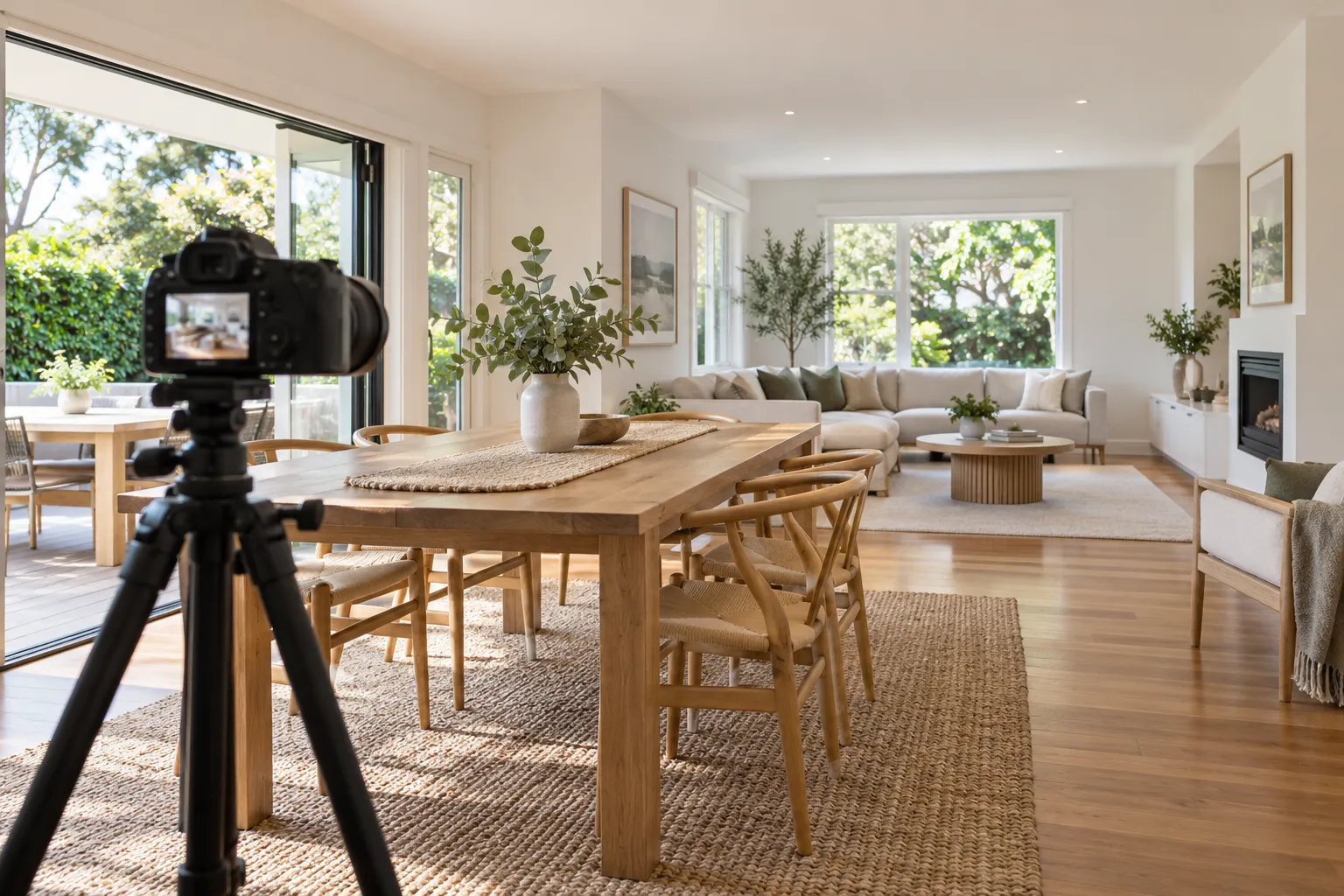
Schedule photography only after repairs, cleaning and styling are complete. Rushing the shoot while trades are still working usually creates extra editing, reshoots or images that no longer match the property.
Before the photographer arrives:
- remove bins, cleaning products and loose cables;
- open blinds and clean the glass;
- switch on working lights;
- clear kitchen and bathroom surfaces;
- make beds consistently;
- tidy the entry, balcony and outdoor areas; and
- move cars away from the frontage and parking spaces being photographed.
The images should represent the property accurately. Agents must not use misleading advertising or conceal information where disclosure is reasonably expected.
Review the advertising copy
Check names, measurements, parking, storage, school references, strata facilities and inclusions. Marketing copy should highlight genuine advantages without making promises the property cannot support.
If the agent is aware of building, pest or strata reports prepared for the property, NSW record-keeping and disclosure rules may apply when a prospective buyer requests the sale contract. Give the agent accurate information about reports and known issues.
Days 27–30: Make launch week easy
Prepare for buyer questions
Collect the information buyers are likely to request:
- council and water rates;
- strata levies and known special levies;
- recent renovation details and approvals;
- rental history, if relevant;
- approximate utility or solar information;
- parking and storage details; and
- access instructions for inspections.
Fast, accurate answers help serious buyers make decisions. Guessing creates risk; if a fact is uncertain, verify it before responding.
Agree on inspections and communication
Set the first open-home times, private inspection process and weekly reporting schedule. Decide how offers will be communicated and who must approve campaign changes.
If the property is tenanted, the sale process needs additional planning. Required notice must be given, access rules must be followed and the inspection schedule should be handled respectfully. A difficult relationship with the occupant can affect presentation and access throughout the campaign.
Do a final pre-launch check
Before the listing goes live, confirm:
- the contract is ready and held by the agent;
- the agency agreement is signed;
- the price strategy matches the current evidence;
- the photos, floor plan and copy are accurate;
- the property is ready for inspection;
- agreed inclusions and exclusions are consistent; and
- enquiry responses and inspection times are prepared.
What not to do during the 30-day preparation period
Avoid making the campaign harder by:
- choosing an agent only because they gave the highest estimate;
- launching before the contract is ready;
- starting major cosmetic work without a budget and deadline;
- concealing known problems rather than addressing disclosure properly;
- approving advertising without checking factual details;
- changing the price message casually during the campaign; or
- waiting until photography week to begin decluttering.
Preparation does not guarantee a particular sale price. It does give the campaign the best chance to create confidence and competition from the moment buyers first see the listing.
Thinking of selling in Sydney?
FuHouse Real Estate helps owners plan the campaign before the property reaches the market—from pricing evidence and presentation priorities to buyer follow-up and negotiation.
Request a free sales appraisal or learn more about selling with FuHouse.
This article provides general information for NSW property sellers and was reviewed on 6 October 2026. It is not legal or financial advice. Your solicitor or licensed conveyancer should advise on the contract and your specific circumstances.
Official sources
- NSW Government — Selling property in NSW
- NSW Government — Agency agreements for the sale of property
- NSW Government — Sales contracts requirements for property agents
- NSW Government — Price estimation and underquoting
- NSW Government — Misrepresentation information for property agents
- NSW Government — Pre-purchase inspection reports
Frequently asked questions
Common questions
Can a Sydney property be advertised before the contract is ready?+
No. NSW residential property cannot be offered or advertised for sale until a contract for sale has been prepared and is available for inspection through the agent.
Should I renovate before selling?+
Not automatically. Complete necessary maintenance and consider targeted presentation improvements first. Major renovation should have a clear value case, realistic timeframe and contingency budget.
Is the highest agent appraisal the best one?+
Not necessarily. The agent must provide reasonable evidence for the estimated selling price. Compare the quality of the comparable sales, the campaign strategy and how the agent intends to manage buyer feedback—not just the headline number.
How early should I contact a conveyancer?+
Ideally at the beginning of the preparation period. Because the property cannot be marketed until the contract is prepared, legal work is often the critical path to the launch date.
Can I sell while the property is tenanted?+
Yes, but the tenancy continues unless it is lawfully ended. Notice and access requirements apply, and the sale contract and marketing must accurately reflect whether the property is being sold with a tenancy or vacant possession.
Questions about your property?
Talk to Fred about property management, leasing or selling in Sydney. This article is general information and is not legal or financial advice.
Talk to Fred